(0060) What We Do

One method. Three phases. Two decades of medtech judgment.

Research, design, and development — F I R M as the method, Henry AI as the engine, senior practitioners at the wheel. Every engagement produces a decision-ready package.

~20 business days · Fixed-fee · Research + Design + Development

01 · The offer at a glance

Research → Design → Development.

Every F I R M engagement flows through three modes of work. Which one leads depends on where you sit today.

Research

Opportunity mapping

Landscape maps, white-space analysis, and moat architecture — grounded in patents, clinical evidence, market signal, and user needs at AI scale.

Design

Concept embodiments

User-needs synthesis and concept exploration — each embodiment traced back to a market gap, a clinical mechanism, and a defensible IP position.

Development

IP-ready direction

Provisional-ready technical disclosures, claim clusters, and a filing strategy your counsel can act on the same week.

02 · Choose your starting point

Three tiers. One method.

Every tier runs the same Discover → Design → Defend arc, with the F I R M loop inside it. The tier sets how far through that arc you go — and the entry point changes based on how much you already know.

Research focused
Discover
Phase 1 of the arc →

"Where can we play, and where is the white space?"

Map the IP terrain, identify opportunity zones, and show you where defensible positions exist.

  • · Landscape map
  • · White-space analysis
  • · Moat architecture brief
  • · Opportunity pillars
  • · FTO snapshot
~10 business days · Fixed-fee
Start with Discover →
Innovation + Design focused
Design
Phases 1–2 of the arc →

"What should we actually build, and can we defend it?"

Everything in Discover, plus user-needs mapping, evidence briefs, market analysis, and concept embodiments.

  • · Everything in Discover
  • · User-needs map
  • · Trend radar
  • · Market snapshot
  • · Concept embodiments
~10–15 business days · Fixed-fee
Start with Design →
IP + Development focused
Defend
Phases 1–3 of the arc →

"We know what we need — can you build around it?"

Custom-scoped engagement matched to a specific objective: diligence prep, redesign discovery, claim-cluster sequencing, or pre-roadmap alignment.

  • · Tailored deliverables
  • · Claim-cluster sequencing
  • · Diligence-ready outputs
  • · Roadmap alignment brief
~15–20 business days · Scoped fee
Start with Defend →
Sample outputs

What lands on your desk.

Five representative artifacts from real F I R M engagements — landscape maps, mechanism briefs, evidence-vs-IP matrices, and concept sketches.

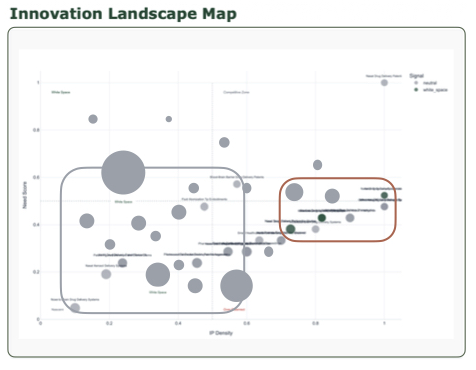
Innovation Landscape Map showing Need Score vs IP Density with white-space clusters highlighted.
Landscape map
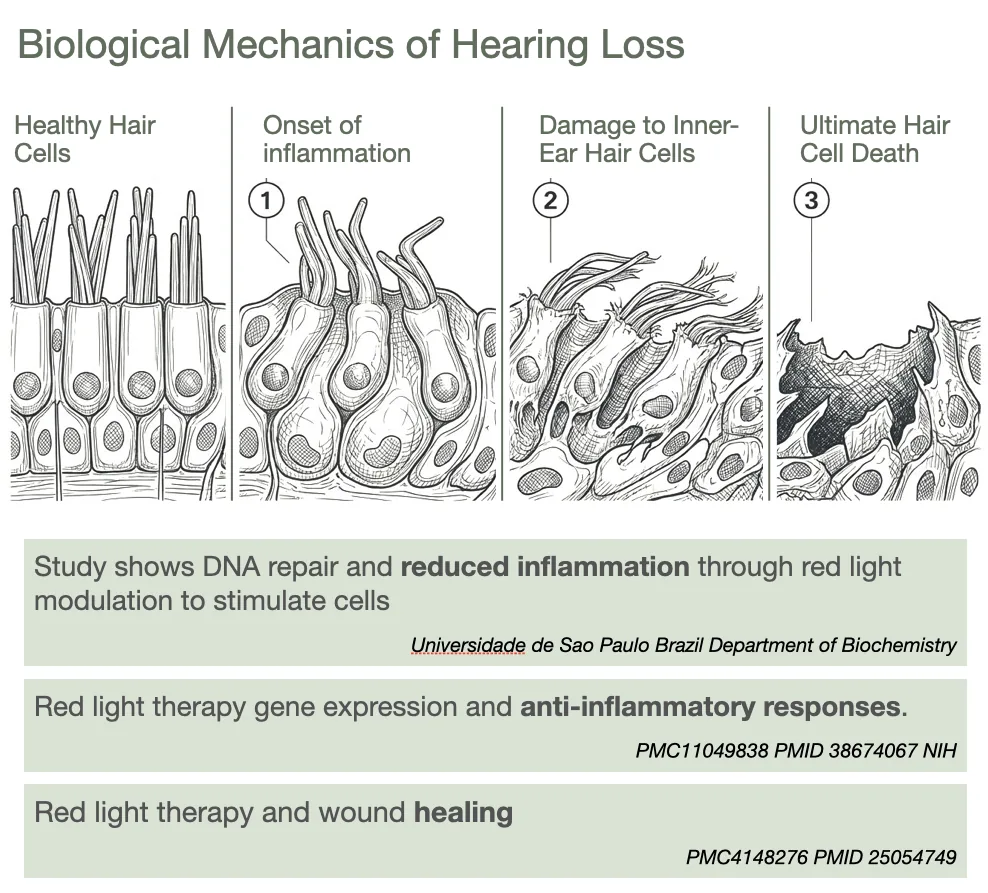
Biological Mechanics of Hearing Loss illustration with red-light therapy evidence citations.
Mechanism brief
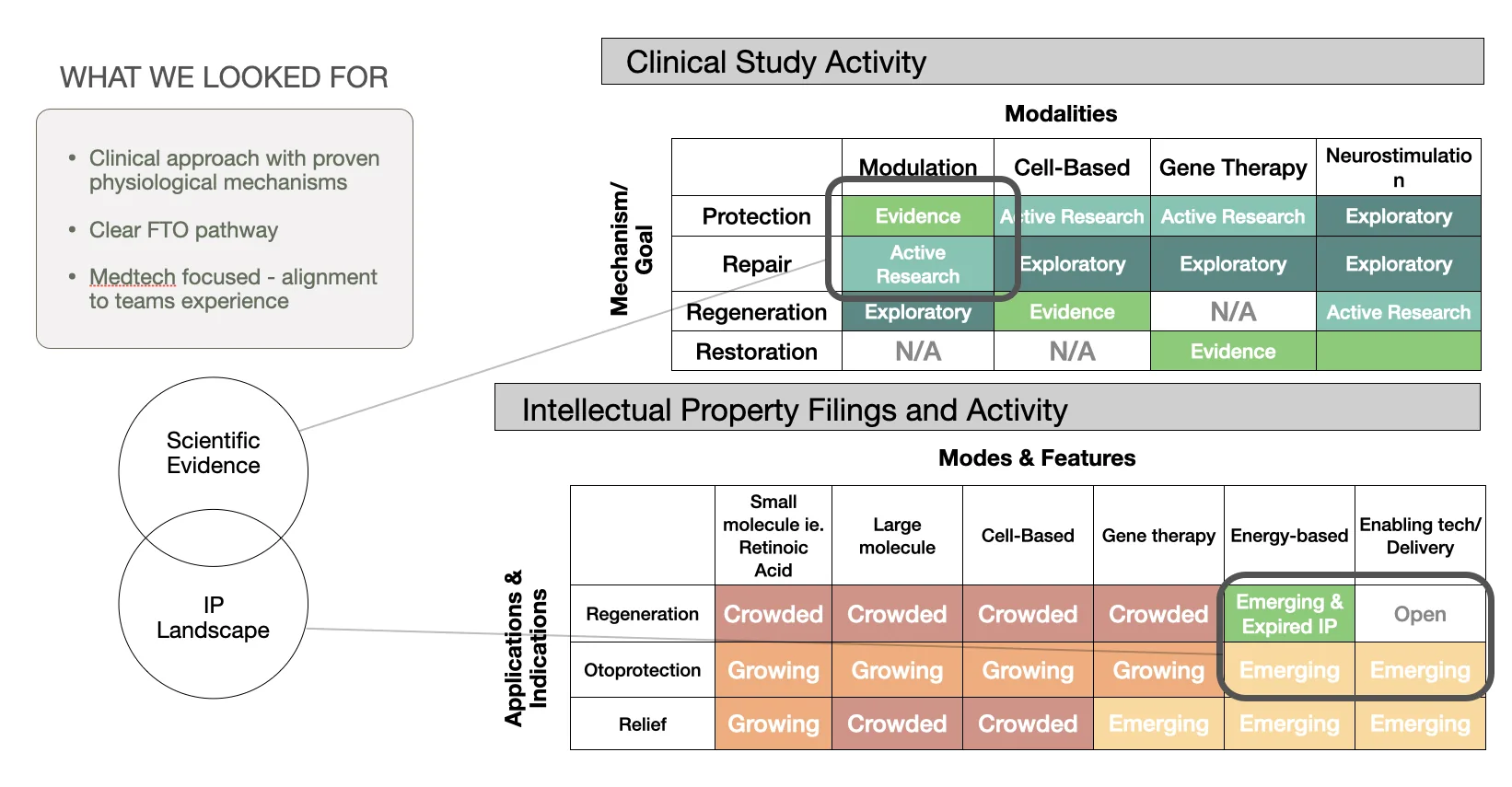
Clinical activity and IP filings matrices with 'What we looked for' criteria.
Clinical × IP matrices
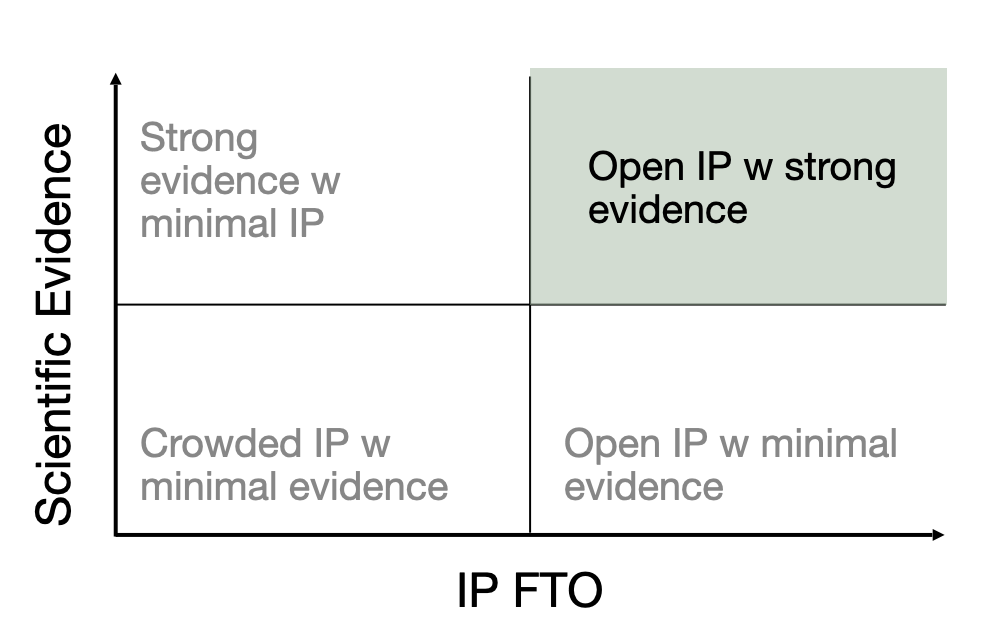
Scientific Evidence vs IP FTO 2x2 quadrant with target zone highlighted.
Evidence × FTO quadrant
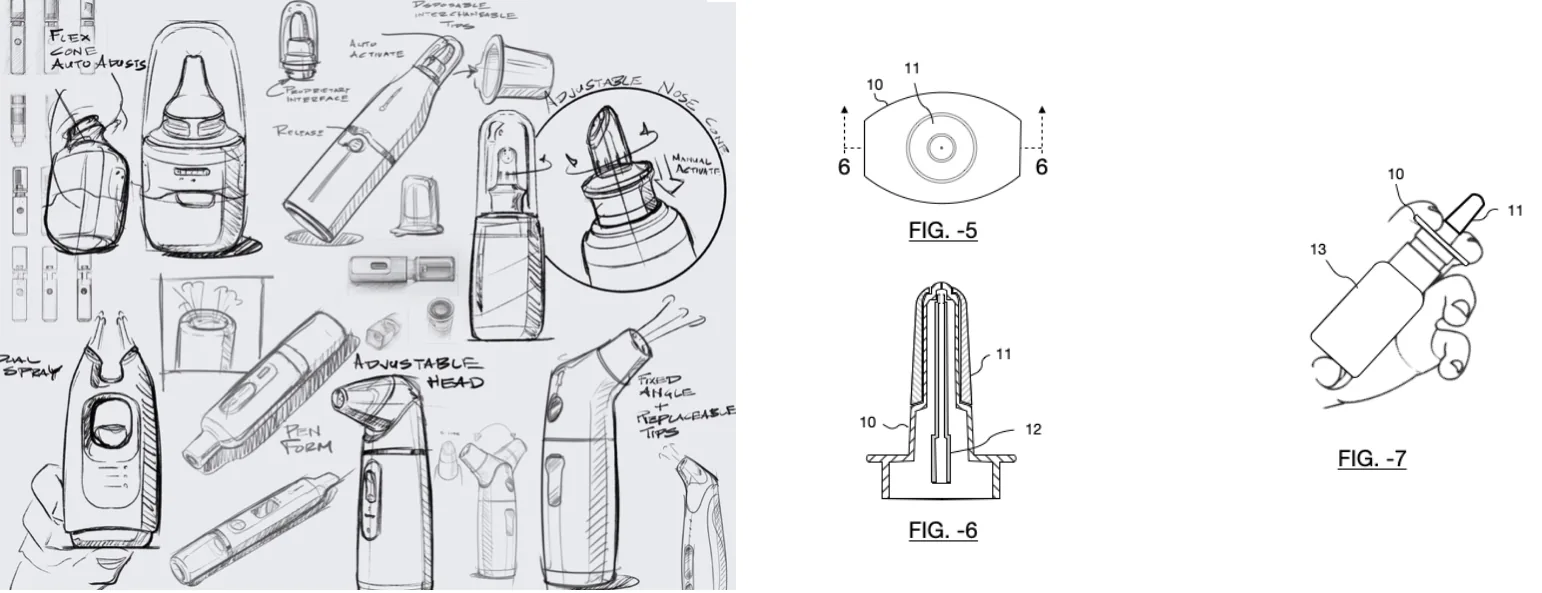
Concept sketches and provisional patent figures from a drug delivery system project.
Embodiment sketches
03 · The system in motion

Discover → Design → Defend.

Henry AI traces a single project through all three phases on one shared ontology — opening the space wide before focusing on what is worth defending. Novel solutions for medical device and drug-delivery companies, in a third of the time.

◐ AI + HUMAN BRAINSTORM DIVERGENT CONVERGENT open the space focus on value Discover Design Defend
↔ scroll to see the full arc
Phase 1
Diverge

Discover

Collect and analyze.

Client and public data is ingested, normalized, and analyzed within and across sources — then written into one shared ontology every later phase can query. The net goes wide here: gaps and white space surface before anything is narrowed.

F I R M inside · Frame · Inspect
Phase 2
Peak → Converge

Design

Needs to embodiment.

An explore agent opens the space with cross-industry inspiration. Then a live human brainstorm diverges and converges — client and Design Stack teams author the ideas worth pursuing, which is what establishes human inventorship.

F I R M inside · Refine
Phase 3
Converge

Defend

Claims to handoff.

Claims are generated and novelty-verified against the ontology, gated by a mandatory human review before anything leaves the building — handed off as a filing strategy where every claim traces back to its source.

F I R M inside · Moat
The through-line

Fuzzy discovery → grounding and validity → deterministic structure. One shared ontology carries the work from first signal to filed claim, the handoff is structured to how your team already works, and human inventorship is preserved end to end.

Inside every phase, the same loop → F I R M

04 · How we work

F I R M — the method behind every tier.

Four phases. One continuous loop. Every artifact traces back to the phase that produced it, and every phase feeds the next.

Phase 01
Frame

Align on the decision. Turn the ambiguous question into a research plan Henry can execute.

Phase 02
Inspect

Map the landscape via Henry AI — IP filings, clinical evidence, trends, user needs, competitors.

Phase 03
Refine

Turn signal into embodiments. User-needs synthesis and concept exploration in the whitespace we found.

Phase 04
Moat

Protect the direction. Provisional-ready technical disclosures, claim clusters, filing strategy.

Frame · Inspect · Refine · Moat

Inside Phase 01 · Frame

Finding the problems worth solving.

When a client comes to us with an existing product line, Frame begins by decomposing the entire experience — from the full user journey down to single interactions. The sample below is pulled from a nasal drug delivery project: in this particular engagement, that process produced 25+ distinct problem frames. Here are two.

Problem frame 01 · The nozzle

The device works, but it’s not intuitive.

The friction
Inserting a rigid nozzle into the nose is uncomfortable and irritates the nasal mucosa. Patients are not sure a dose was delivered.
The moment of use
Self-administering at home, untrained — one hand holding the device, head tilted back, eyes often closed, attention on bracing for the dose.
The committed action
Once the nozzle is partially inserted, actuation is the point of no return. A mid-spray flinch shifts the angle — the dose lands incomplete and off-target.
Why it persists
Aerosol geometry — orifice diameter, spray-cone angle — demands a rigid or semi-rigid nozzle. Rigid geometry inside an irregular, sensitive passage creates localized contact pressure, and the physical pump forces an unnatural, unstable dosing posture.

Missed doses → accumulating irritation → drug off-target → efficacy, adherence & market risk

Problem frame 02 · The dose counter

A full bottle and an empty one feel identical.

The friction
In a multi-dose sprayer there is no reliable way to know how many doses remain. Patients stop early believing the device is empty — or keep pressing a depleted one.
The moment of use
Chronic or episodic therapy. A 10–30 second interaction on the go, in the home setting, or in public — one hand on the bottle, attention split.
The committed action
Once the device actuates, medication is delivered or wasted. Failure arrives four ways: under-use, over-use, surprise depletion mid-symptom, and missed refill windows.
Why it persists
The liquid is sealed in an opaque container — not visible, not tactile through the pump, not audible until the near-empty “spit” most users miss. Mechanical number-wheels add cost, desynchronize from doses delivered, and fail in low light — so patients shake the bottle and guess.

Under-use · over-use · surprise depletion → the therapy, and the patient’s trust in it, erode

Frame ends with a definition of success

What success looks like — agreed before any concepting.

  • Patients complete the full prescribed course — and describe the device as simple, routine, intuitive.
  • Dose state readable at a glance — ambient, no counting, no shaking, no special orientation.
  • Operable without training, first use included.
  • Formulation protected across shelf life; sealed for hygiene; biocompatible.
  • Manufacturable at consumer price points; survives drops; no power source unless premium.
  • Regulatory-aware from day one — dose counters can draw 510(k)/PMA attention.
25+
Problem frames
2
Patents pending
1
Protective moat

The client walked away with more than a single solution: a protective moat of novel approaches to the problems uncovered during discovery.

05 · Concept-stage FTO

FTO before the first sketch.

Freedom-to-operate at concept stage is 10× cheaper than FTO after the design is frozen. Every hour spent on prior-art analysis before embodiment is an hour that doesn't have to be spent on redesign, workaround, or licensing later.

Phase
Concept
$

FTO integrated into Refine. Concepts that fail FTO never get drawn.

Phase
Prototype
$$$

Prior-art hits force redesign or licensing.

Phase
Post-launch
$$$$$

Litigation, injunctions, market withdrawal.

Every F I R M engagement includes an FTO snapshot as a Discover deliverable, and full FTO analysis feeds every embodiment in Design and every claim in Defend.

06 · Diligence

Investor-ready assessments — days, not months.

For founders preparing to raise, investors evaluating a deal, or acquirers scoping a target — the same F I R M engine, tuned for a decision window.

What it is

The read that fits the LOI.

A structured assessment of IP moat, technical merit, market fit, team, and deal terms — produced in the timeline your process demands.

Five lenses

One picture, five angles.

  • · IP moat strength
  • · Competitive & university landscape
  • · User & stakeholder validation
  • · Trend & market alignment
  • · Clinical evidence confidence
Timelines

Match the deal clock.

  • Lens Brief — single lens, 5 business days
  • Full Diligence — five lenses, 15 business days
  • Hot Deal Mode — 72 hours when the LOI is on the table
07 · FAQ

Frequently asked.

What's a F I R M engagement, exactly?+

A ~20 business-day, fixed-fee engagement that runs the Frame · Inspect · Refine · Moat loop on your category. You get a decision package: opportunity zones, user-need synthesis, concept embodiments, and provisional-ready technical disclosures.

How fast can you turn work around?+

Discover: ~10 business days. Design: 10–15. Defend: 15–20 scoped. Diligence: Lens Brief 5 days, Full Diligence 15 days, Hot Deal Mode 72 hours.

What does "fixed-fee" mean in practice?+

One scoped fee at kickoff, one invoice at delivery. No hourly billing, no scope creep. The scope is a written deliverable list, agreed before we start.

Do we own everything that comes out of an engagement?+

Yes. All design content, embodiments, and disclosures produced by Human + Henry are owned by the client. Full IP transfer at delivery.

What if we already know what to build — can you skip Discover and go straight to IP?+

Yes — the Defend tier is scoped for exactly this. Custom-scoped work on a specific objective: diligence prep, redesign discovery, claim-cluster sequencing, or pre-roadmap alignment.

How does Henry AI actually work, in one sentence?+

Henry mines public evidence at scale — IP filings, clinical studies, market signals, user needs, technology trends — and surfaces the intersection points a senior team then interprets and turns into designs. See how Henry works →

Do you replace our IP counsel, or work alongside them?+

Alongside. We produce provisional-ready technical disclosures and claim-cluster strategy; your counsel handles filing, prosecution, and the legal work. Every filing is reviewed by IP counsel before it goes to the USPTO.

What's the difference between a Lens Brief and full Diligence?+

Lens Brief: single decisive question, one lens, 5 business days — built to inform a single decision. Full Diligence: all five lenses across IP, competitors, users, market, clinical evidence, 15 business days — built for the whole deal.

Can Henry produce a redacted sample on our category?+

Yes. Tell us the category, the stage, and what you're trying to decide, and we'll send a sanitized sample run on a comparable category — usually within 48 hours. Try Henry →

How do we get started?+

A 20-minute conversation. We'll sanity-check fit, recommend the right tier, and quote a fixed fee. Most engagements start within two weeks.

Ready to start?

A 20-minute conversation is the fastest way to figure out which tier fits — and what you can skip for now.

Start the Conversation →